
How do we see salmon?
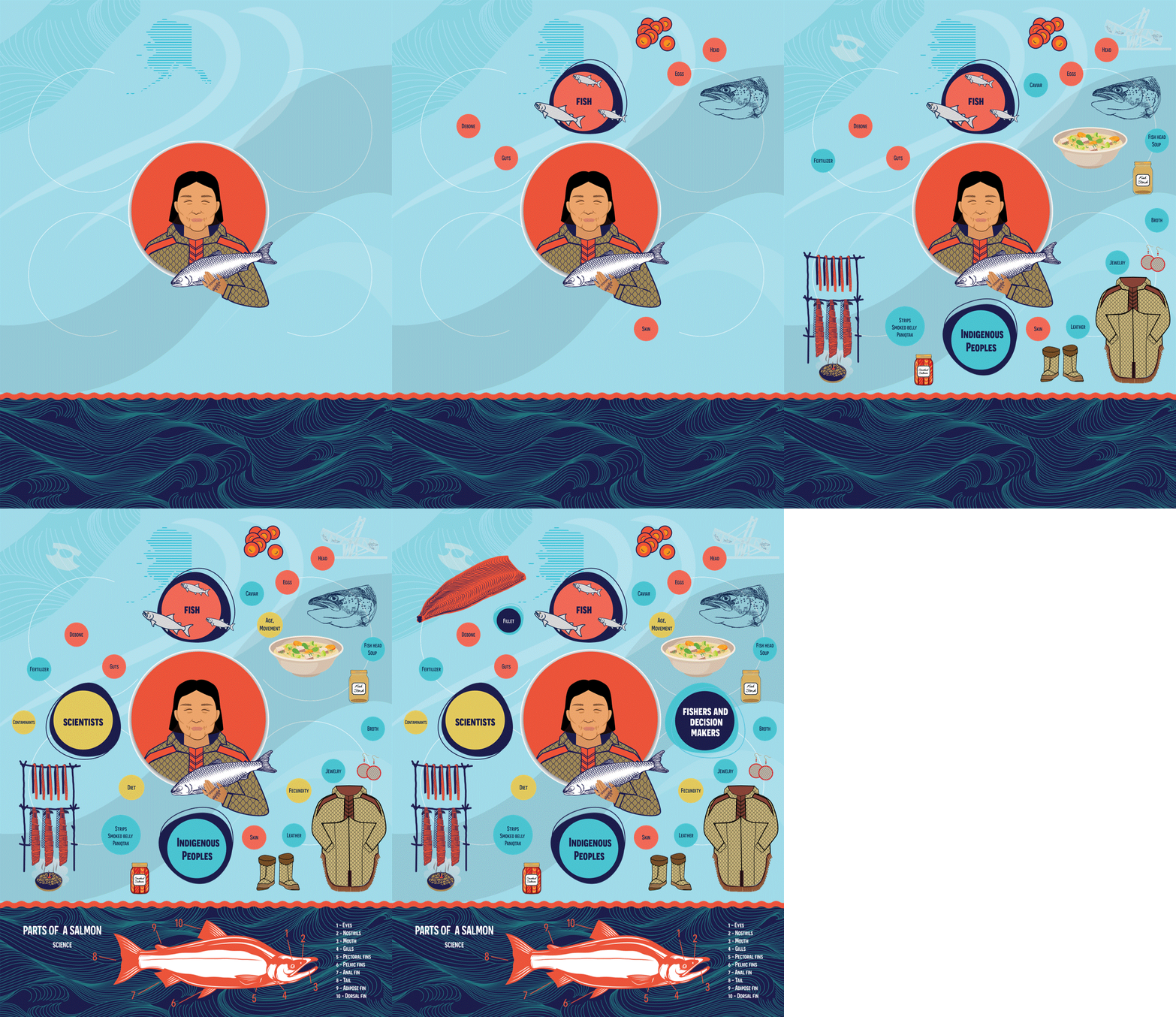
The purpose of this illustration is to visualize the power and benefit of co-production of knowledge, that is, bringing different knowledge systems and perspectives together around a common topic. The co-production members we focus on are Indigenous Knowledgeholders, Scientists, and Decision Makers.
We illustrate the benefit of co-production based on the knowledge and importance of salmon in Alaska Native culture and well-being, in our river and ocean ecosystems, and in our economy (but you could create something similar around any other topic).
In our example we start with a grandmother at the center, holding a whole salmon to illustrate the central importance of people, their perspectives, knowledge, values, and experiences. She is in front of a backdrop of the habitats the salmon lives in (river, ocean), and some tools (ulu, fish wheel) associated with salmon harvests, providing hints and context of the broader human and ecological system the salmon is part of and interacts with. Many of the body parts of the salmon, shown in the red bubbles on slide 2, are relevant to people, depending on who you are.
For Indigenous Peoples, their perspective, experience, knowledge, and significance of salmon focus around food security and sovereignty, subsistence activities, traditions and associated oral histories passed down through generations, as well as non-food related products, such as clothing and jewelry. These are all shown in the turquoise colored bubbles.
Scientists, especially natural scientists, on the other hand, may be primarily preoccupied with understanding the ecology of salmon, the movements and habitat uses in rivers and oceans, how contaminants and other stressors may influence their population structure and dynamics (like age and fertility), and how we may best conserve those populations. This is shown in the yellow bubbles.
Yet an additional perspective on salmon comes from fishers and decision makers, whose lens into the world of salmon is primarily economic, focusing on policies and fisheries management practices that govern the amount of fish that can be harvested by different gear types in the ocean and the river. These perspectives are shown in the dark blue bubbles.
But now we invite you to pause and step back for a moment and look at the entire picture. Salmon is all the things you see, all color bubbles combined. Any single perspective, no matter how deep its knowledge, is incomplete. Only by coming together and sharing our different perspectives of salmon can we understand all of what it is and means, and that we need to work together if we are to ensure thriving salmon and human populations in an equitable way.
Published: 2024
Product type: GIF and Graphic / Brochure
Categories: Arctic Change, Arctic Policy Issues, Co-Production, Cross-Cutting Topics, Human Well-Being, Indigenous Issues, Science, and Science Communication
Citation:
Larsen, D., Donatuto, J., Schaeffer, J.Q, & Wiese, F. How do we see salmon? Study of Environmental Arctic Change, May 2024.