‘People First’ and Other Reflections from Arctic Encounter Symposium 2024
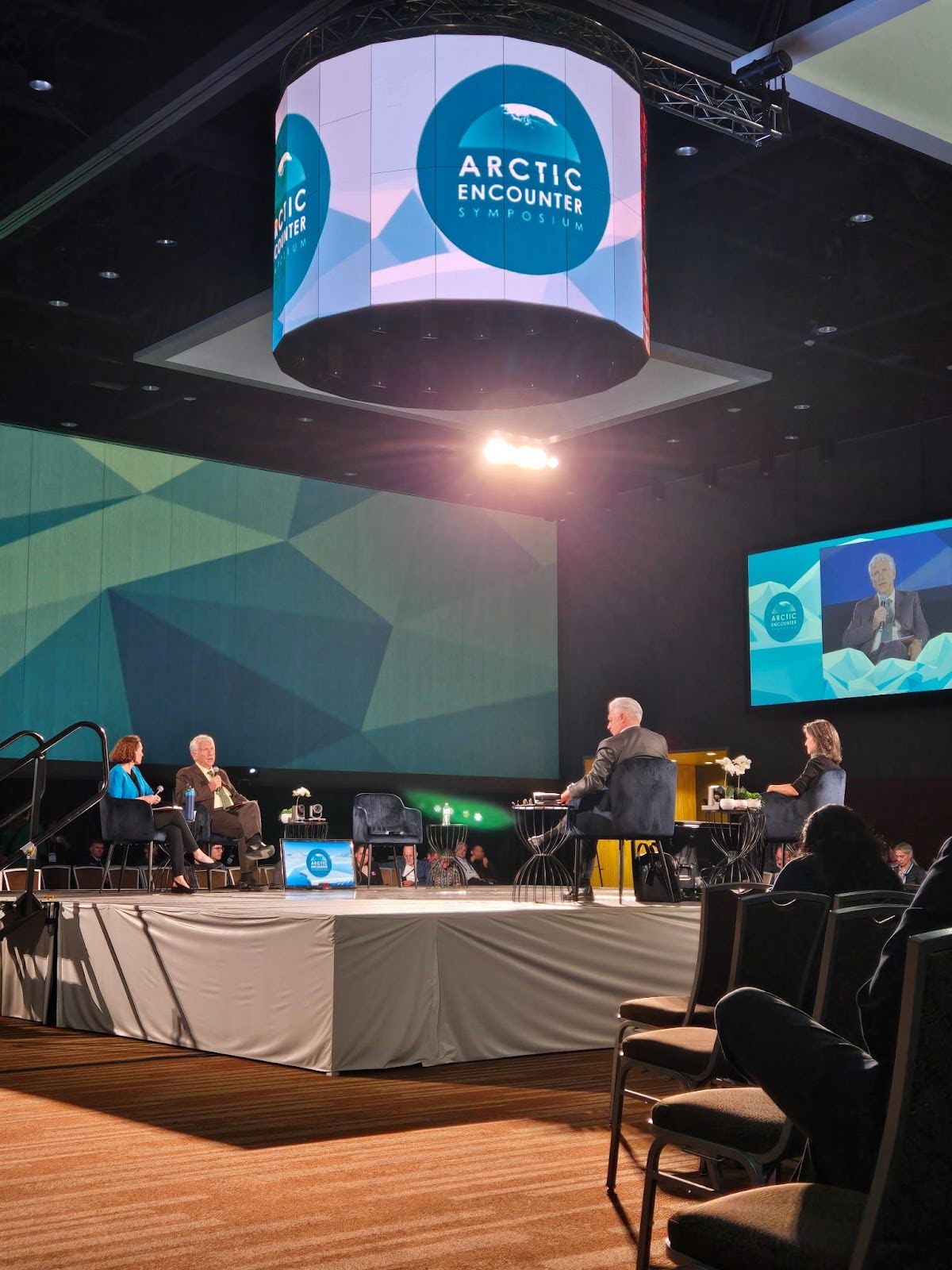
Slushy sidewalks, falling flakes, and brisk breezes indicate April’s late-winter tendrils are yet to relinquish Anchorage from their grasps. None of it freezes folks in their footsteps. Over 1,000 people from many corners of the globe have traveled to Alaska’s metropolis for the 10th anniversary Arctic Encounter Symposium (AES), North America’s largest Arctic policy and business conference. There are ambassadors, scientists, Indigenous People, and more. SEARCH is there, too.
This year, Brendan Kelly, Vera Kingeekuk Metcalf, Francis Wiese, Alex Shahbazi, Jackie Qataliña Schaeffer, Edward Alexander, Matt Heavner, and Liz Qaulluq Cravalho made up the contingent of SEARCH members present. Between them, they engaged hundreds of attendees across dozens of presentations, panels, meals, and a fashion show. In doing so, they contributed to many vital of the main themes that emerged.

When You Think of the Arctic, You Have To Think of People First
The need for centering Arctic people in all things Arctic was a key message from Arctic Encounter’s three3-day run. An area so often perceived by the rest of the world as either sparse in life or valuable mainly for its resources, the Arctic is growing in prominence as economic, political, and climatic interest in the far north increases.
SEARCH Co-Principal Investigator and Director of the Eskimo Walrus Commission Vera Kingeekuk Metcalf explored this concept in a session entitled, Thriving Communities: Addressing Health and Food Security in the Arctic. Alongside fellow leaders from the United States, Iceland, and Greenland, Vera highlighted the changing Arctic environment’s immense impact on Indigenous People’s food security, safety, and ways of life.
The Arctic’s Connection to the Rest of the World
Earth is one massive interconnected system with the Arctic an influential portion of the total globe. Both environmentally and geopolitically, events that happen in the Arctic impact lower latitudes, and events in lower latitudes impact the Arctic. Yet many conference-goers argued that the realities of the Arctic are insufficiently understood by those that live farther south. The presence of ambassadors from places like Portugal, Japan, Belgium, and the UK was therefore notable. Indeed, it seemed like every other session had at least one person—high level diplomat or not—remarking on this being their first visit to Alaska or, for that manner, any portion of the far north. To emphasize on-the-ground connections with the circumpolar north, AES organizers brought dozens of dignitaries to Utqiagvik the day after the conference concluded.
‘East-West’ is Just as Important As ‘North-South’
Often within Arctic affairs, emphasis is placed on northern communities and nations building relations with communities and nations further south. Throughout the conference, however, consistent emphasis was placed on advancing relations eastward and westward between the different Arctic states, regions, and people.
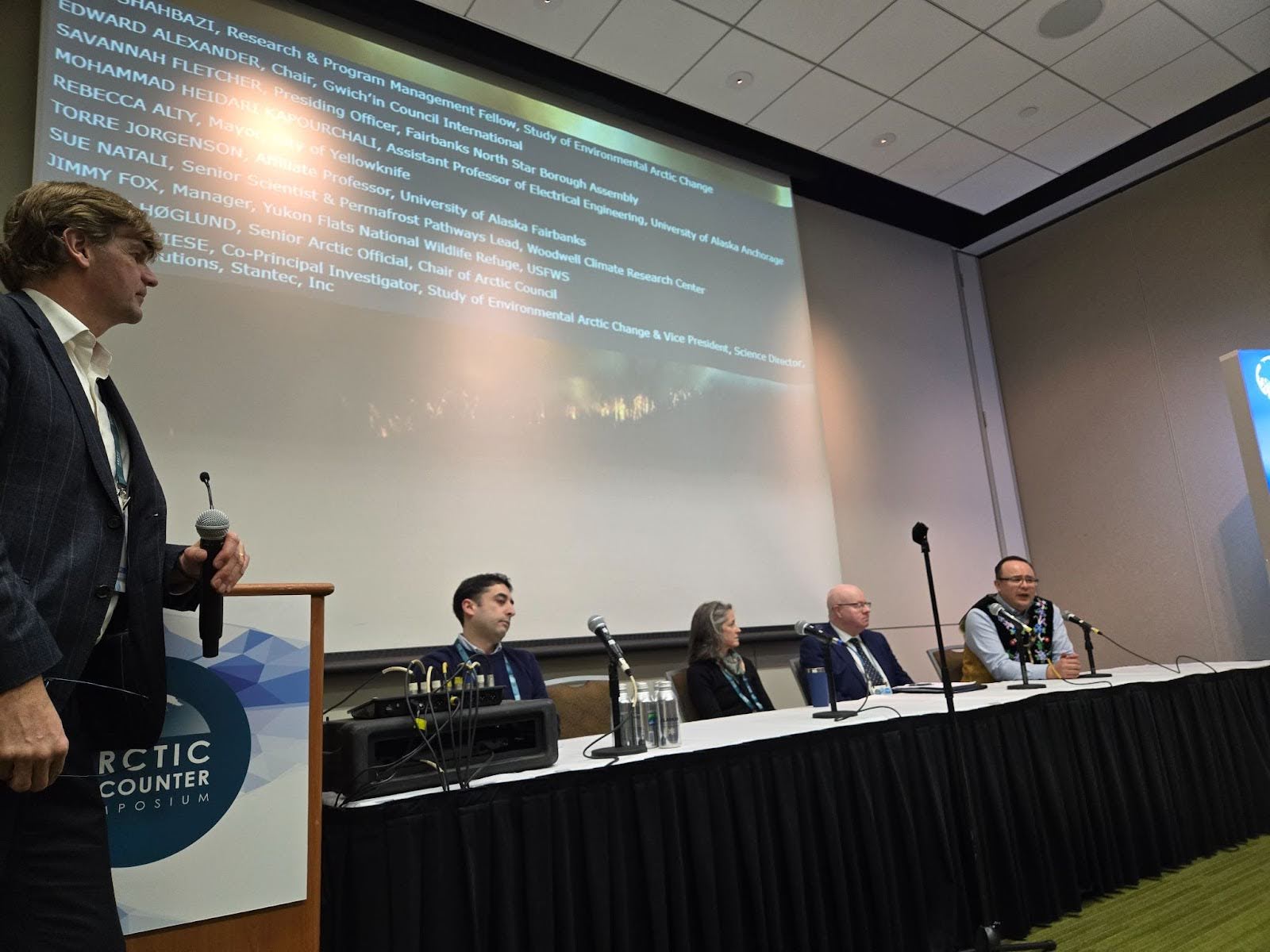
This point was underlined during SEARCH’s breakout session Rising Arctic Flames: The Local and Global Consequences of Northern Wildland Fire. Conceived of and co-convened by Edward Alexander, Francis Wiese, and Alex Shahbazi, the session highlighted the breadth of complex consequences wrought by northern wildfire on carbon emissions, communities, and ecosystems alike. Co-chair of Gwich’in Council International Edward Alexander and Morten Høglund, chair of the Arctic Council’s Senior Arctic Officials, emphasized the need for Arctic and boreal nations and communities to work together to address northern wildfire’s rapidly intensifying threats.
The Arctic Can Have a Future that Thrives
So often the Arctic narrative revolves around glaciers melting, sea ice retreating, ecosystems struggling, geopolitics intensifying, and communities facing an increasing number of challenges. Yet time and again, Arctic Encounter speakers and attendees pointed towards productive ways forward. Collaboration, trust, and centering Indigenous voices were all presented as important ways towards meeting goals. SEARCH contributes actively towards this end by braiding Indigenous Knowledge, science, and decision making expertise to seek and share actionable solutions. We remain committed to advancing a thriving future Arctic alongside folks at Arctic Encounter and beyond.